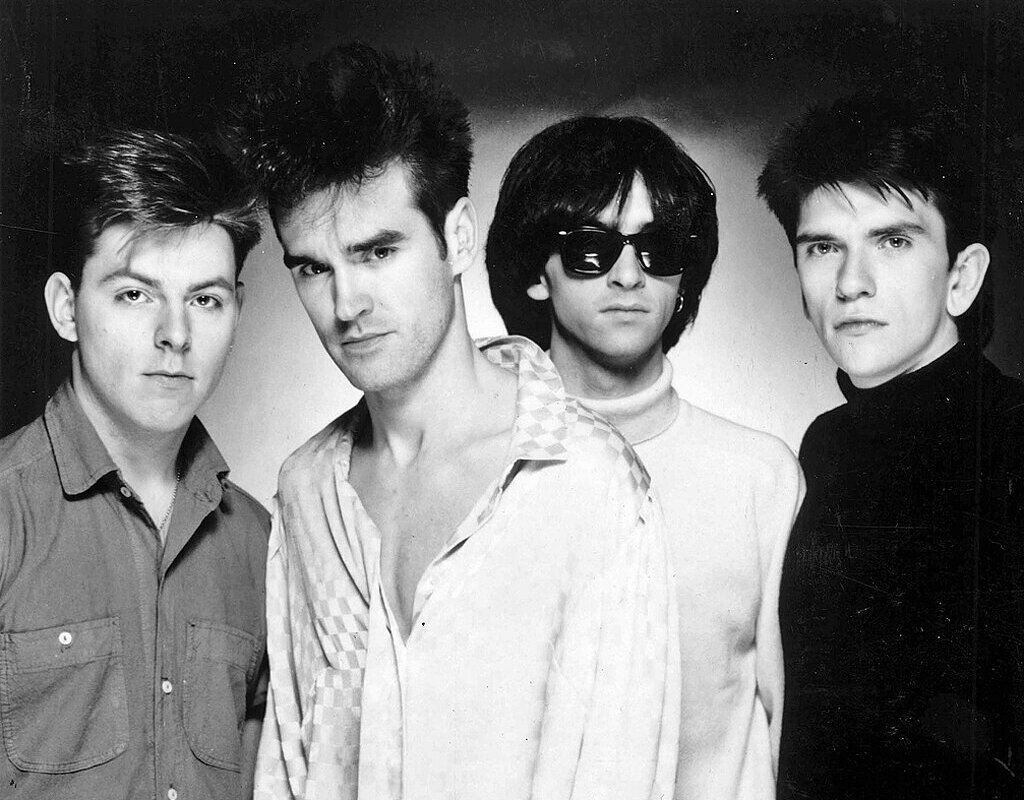
The Smiths
The Legacy
The story of The Smiths is the story of an unlikely collision. It begins in the early 1980s in Manchester, a city still recovering from the post-industrial economic devastation of the Thatcher era. It was a bleak, grey landscape that had already birthed the post-punk brilliance of Joy Division, but the youth of Manchester were searching for something different. Enter Steven Patrick Morrissey, a fiercely literate, highly opinionated, and militantly celibate recluse who spent his days devouring Oscar Wilde, feminist literature, and 1960s girl-group records. He was a man out of time, waiting for a catalyst. That catalyst arrived in the form of Johnny Marr, an extraordinarily gifted young guitarist who knocked on Morrissey's door in 1982 with a proposition to start a band. It was the most important door-knock in British indie music history.
The chemistry was instantaneous and volatile. Marr’s intricate, Rickenbacker-jangling guitar work—heavily influenced by The Byrds and Motown—provided a luminous, melodic counterpoint to Morrissey’s melancholic, hyper-articulate baritone. They were soon joined by Andy Rourke on bass and Mike Joyce on drums, forming a rhythm section that was criminally underrated but absolutely essential to the band's driving, kinetic sound.
The Golden Era: A Cultural Phenomenon
Unlike their contemporaries who relied heavily on synthesizers and glamorous MTV aesthetics, The Smiths were a stark, guitar-driven anomaly. They signed to the independent label Rough Trade Records, defiantly rejecting the major-label machine. When their self-titled debut album dropped in 1984, it was a shock to the system. Songs like 'Hand in Glove' and 'This Charming Man' were immediate, urgent, and radically different. Morrissey’s lyrics explored themes of alienation, sexual ambiguity, and working-class misery with a razor-sharp wit and tragicomic flair. He didn't just sing to his audience; he bled for them.
The fans didn't just listen to The Smiths—they pledged absolute devotion. The stage was set for their 1985 sophomore effort, 'Meat Is Murder', a militant, sprawling masterpiece that not only reached Number One on the UK Albums Chart but also turned a massive portion of their fanbase into vocal vegetarians. By 1986, they released 'The Queen Is Dead', universally regarded as their magnum opus. It perfectly balanced Marr’s breathtaking melodic brilliance with Morrissey’s venomous attacks on the monarchy, the music industry, and his own crippling loneliness. It is a flawless record, standing as a towering monument of 1980s rock.
The Implosion: Burning Out Brightly
The intensity that made The Smiths so brilliant was the exact same force that destroyed them. The pressure of constant touring, relentless media scrutiny, and a deeply dysfunctional management structure took its toll. Johnny Marr, exhausted and creatively stifled, began to drift. The partnership that had defined British indie music was slowly collapsing under its own weight.
During the recording of their final studio album, 'Strangeways, Here We Come' (1987), the band was functionally falling apart. Despite the incredible quality of the music—both Morrissey and Marr cite 'Strangeways' as their favorite Smiths album—the center could not hold. Marr left the band before the album was even released, citing exhaustion and musical differences. The Smiths were dead just five years after they began.
The Aftermath and Enduring Legacy
Their bitter implosion left a massive, bleeding void in the British music press. While the 1990s would bring the explosion of Britpop—bands like Oasis, Blur, and Suede all owed an incalculable debt to The Smiths—none could replicate the absolute fanaticism they inspired. The split was followed by heavily publicized, deeply acrimonious lawsuits over royalties, fracturing the relationships between the members permanently.
Despite constant, multi-million-dollar offers to reunite for festivals like Coachella and Glastonbury, they have adamantly refused, preserving their legacy as a perfectly encapsulated moment in time. The Smiths remain the ultimate outsider band. They took the misery of the human condition and turned it into perfect, chiming pop music. You cannot talk about the history of alternative rock without starting in Manchester, in 1982, with a Rickenbacker and a handful of gladioli.
The Personnel
The architects behind the sound:
- Morrissey (Vocals)
- Johnny Marr (Guitars, Keyboards)
- Andy Rourke (Bass)
- Mike Joyce (Drums)
Essential Discography
The definitive cuts:
The Smiths (1984)
The raw, unpolished debut that sounded like nothing else on earth.
Meat Is Murder (1985)
Militant, political, and musically sprawling. A furious statement of intent.
The Queen Is Dead (1986)
Their undisputed masterpiece. A perfect, tragicomic balance of Marr's melodic brilliance and Morrissey's venom.
Strangeways, Here We Come (1987)
The brilliant, experimental swan song recorded while the band was actively falling apart.
Archivist Notes: The Smiths
Verified Literature
Our archivists are currently acquiring literature for this artist.